

If your tenant stopped paying rent and you don’t know what to do next — this guide is for you. Florida law gives landlords a clear process to follow, but time matters and so does every step you take. Here’s the practical roadmap most landlords wish they’d had sooner.
My Tenant Stopped Paying Rent in Florida — Here’s Exactly What to Do (Step by Step)

If your tenant stopped paying rent and you don’t know what to do next — this guide is for you. Take a breath. You have legal options, and Florida law gives you a clear process to follow. But time matters, and so do the steps you take in the right order.
This isn’t legal advice — you should consult an attorney for your specific situation. But this is the practical roadmap most Florida landlords wish they’d had before the situation got worse.
Whatever you do, do NOT change the locks, shut off utilities, or remove the tenant’s belongings. Self-help eviction is illegal in Florida and can result in the tenant suing you — even if they owe you money. Follow the legal process.
Step-by-Step: What to Do When a Tenant Stops Paying in Florida
Wait for the Legal Delinquency Date — Then Act Immediately
Under Florida Statute §83.56, rent is considered late after the due date specified in your lease. Most leases have a grace period of 3–5 days. Once that grace period passes, you can begin the legal process. Do not wait weeks hoping it resolves itself — every day costs you money and complicates your timeline.
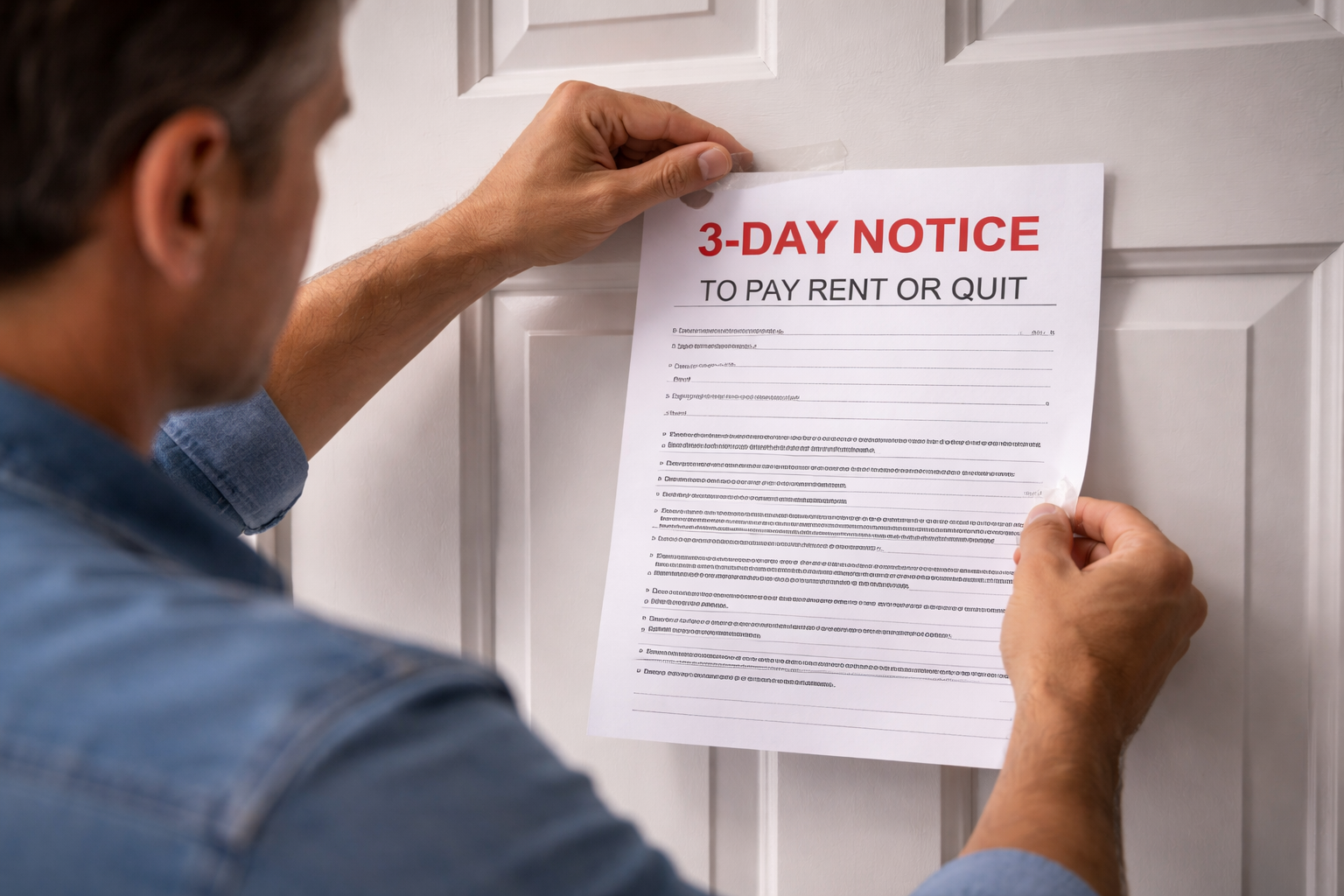
Serve a 3-Day Notice to Pay Rent or Vacate
This is the first required legal step in Florida’s eviction process. The notice must specifically state the amount owed, the address, and inform the tenant they have 3 business days — not counting weekends or legal holidays — to pay in full or vacate. You must serve it correctly: hand-delivery to the tenant, a household member 15+, or posted on the door AND mailed via certified mail. A defective notice can restart your entire timeline.
If They Don’t Pay or Leave — File for Eviction
If the 3 business days pass with no payment and no vacating, you can file a Complaint for Eviction at your county courthouse. In Miami-Dade, Broward, Palm Beach, and other South Florida counties this is filed in county court. You’ll pay a filing fee and serve the tenant with a Summons. At this point many landlords hire an eviction attorney — the cost is usually $400–$900 and is far less than the weeks of additional delay from a procedural error.
Attend the Hearing — and Win the Writ of Possession
The tenant has 5 business days to respond to the eviction filing. If they don’t respond, you can request a default judgment. If they do respond, a hearing will be scheduled. If you win, the judge issues a Final Judgment for Possession and a Writ of Possession — which is served by the sheriff. The tenant then has 24 hours to vacate before the sheriff enforces the writ.
Pursue the Money Owed (Separately)
Winning the eviction doesn’t automatically recover your back rent. You’ll need to file separately in small claims court (for amounts under $8,000) or county civil court for larger amounts. If you have a money judgment you can attempt to garnish wages or bank accounts. It’s not always collectable — but it’s on record and stays on their credit.
“From first missed payment to sheriff enforcement, the Florida eviction process typically takes 45 to 75 days when done correctly. Every procedural mistake adds weeks. Getting it right the first time matters.”
Florida Eviction Timeline at a Glance
- Day 1: Rent is late beyond grace period
- Day 1–2: Serve 3-Day Notice to Pay or Vacate
- Day 4–5: 3-day clock expires — file eviction complaint if unpaid
- Day 5–10: Court filing + service of summons on tenant
- Day 10–15: Tenant response period (5 business days)
- Day 20–35: Default judgment or hearing scheduled
- Day 35–55: Writ of Possession issued + sheriff enforcement
- Day 45–75: Tenant out, unit available for turnover
Common Mistakes That Extend the Timeline
- Accepting partial payment after serving the 3-day notice — this can void it
- Not posting the notice correctly — hand-delivery alone may not be sufficient
- Including lease violations in a notice that should only address rent
- Missing court deadlines or filing in the wrong court
- Trying to negotiate after filing without understanding the legal implications
If your tenant files any kind of habitability complaint after receiving the notice — even if it’s retaliatory — it can complicate your eviction. Document all maintenance requests and your responses. A professional property manager keeps that paper trail automatically.

Already Dealing With a Non-Paying Tenant?
We can walk you through your options and help you understand your next move — no obligation, just straight answers from people who do this every day.
Schedule a Free Consultation South Florida PM ServicesHow a Property Manager Protects You From This Happening Again
If you’ve been through this once, you know the real cost — and it’s not just money. It’s the sleepless nights, the awkward confrontations, and the weeks of uncertainty while your investment sits stuck.
Professional property management prevents non-payment situations from developing through:
- Rigorous income verification — we require 2.5–3x monthly rent in verifiable income before any approval
- Full eviction history screening — prior eviction filings are an immediate red flag, regardless of outcome
- Automated rent collection — tenants pay through the online portal; late notices are triggered automatically without you making a single uncomfortable call
- Attorney-drafted leases — enforceable, legally compliant, and designed to protect you from every angle
- Proactive tenant communication — we catch hardship situations early and work with your instructions, not our emotions
The Bottom Line
A tenant who stops paying rent is stressful — but it’s not hopeless. Florida gives landlords legal tools to move efficiently when they follow the right process. The key is to act fast, document everything, and not cut corners on the notices that hold up in court.
If this situation has made you reconsider managing your own property, that’s a completely rational response. The landlords who hire professionals after their first bad experience almost universally say they wish they’d done it sooner.
Let’s Make Sure This Never Happens Again.
We screen better, enforce leases without emotion, and handle every step so you never have to. Talk to us today — it’s free and there’s no pressure.
Talk to a Property Manager → View Our Florida Services


Join The Discussion